.png)
Why I Started Love + Choice
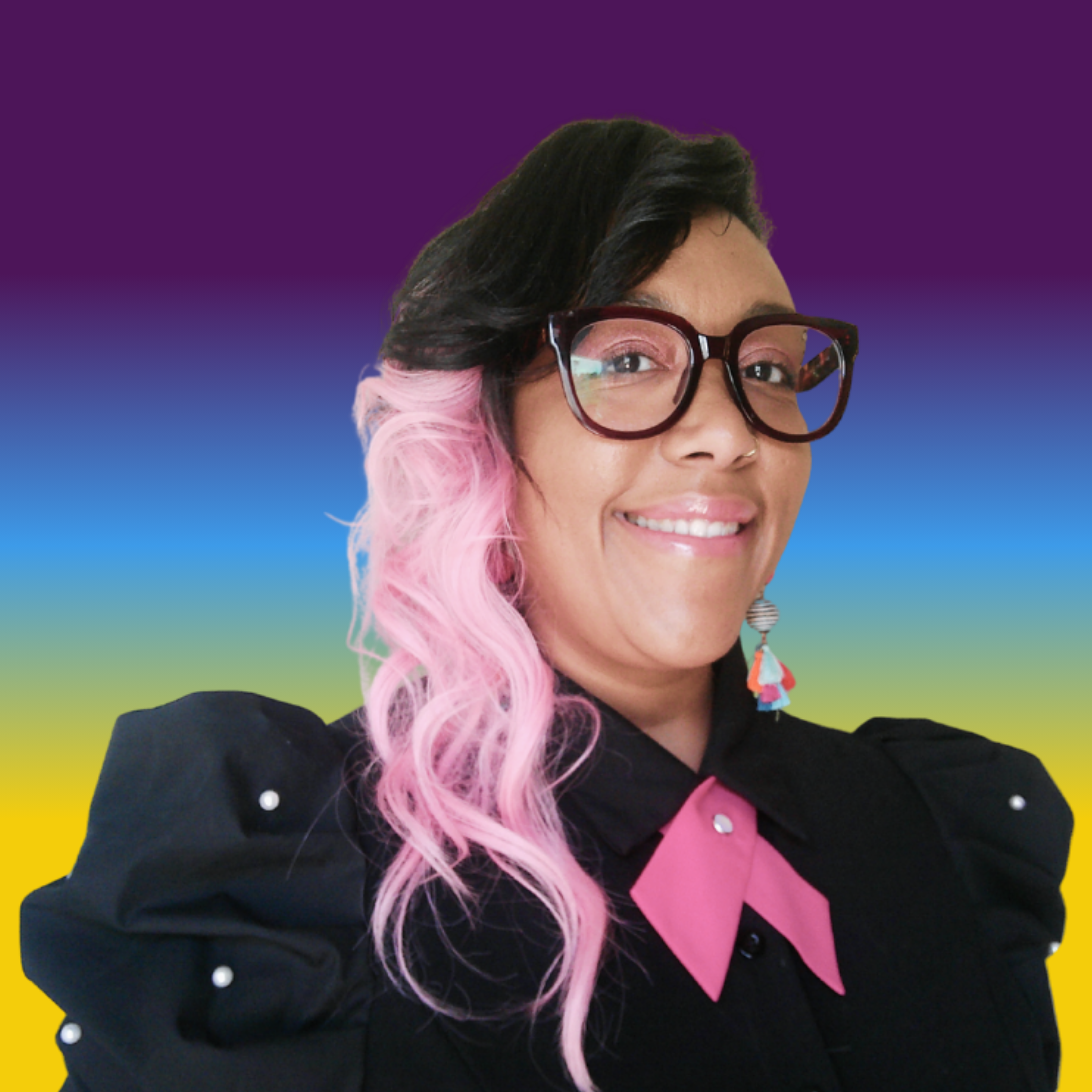
- Dr. Avina I. Ross
- Jan 12
- 4 min read
Nine years into parenthood, I can honestly say that raising my son, Langston, has been most difficult in three large and sometimes overlapping areas: preventing trauma and harm; navigating the tension between respecting his personal agency and parenting a creative, strategic child who challenges rules and expectations; and advocating for his needs within systems not designed to honor his voice, humanity, or genuine partnership with parents.
The rubber truly met the road with the public school system during his kindergarten year, even before he could write his name.
Early on, we learned that he is a neurospicy kiddo, someone who experiences and engages with the world in ways that do not always align with conventional expectations, including those held by many adults. As a single mother, I knew I would need to further strengthen my already well-developed advocacy heart and skill set, shaped through years of professional work supporting survivors of domestic violence, to secure the support, services, and accommodations he needed to truly thrive at school. I had my own harmful experiences with public school systems, so I approached this journey naturally-guarded. Together, Langston and I entered the public school system carefully and intentionally. Still, we frequently encountered resistance. Schools described themselves as student-centered, yet overcrowded classrooms and the absence of adequate support staff took priority. They spoke of developmentally appropriate practices, yet disciplinary responses toward Langston were often anything but. And while diversity, inclusion, and student well-being were named as core values, I received daily punitive behavior reports and frequent calls about classroom behavior, issues rooted not in my child, but in classroom management structures.
I would be remiss if I did not acknowledge the racialized and gendered contexts that, in my view, compromised my son’s ability to have his needs fully met. My son is a Black boy. Throughout his public school experience, every classroom teacher, librarian, principal, and social worker he encountered was white. The only Black staff members he regularly interacted with were two Black women, one serving in a disciplinary leadership role and the other assigned to him as a behavioral specialist through his 504 plan.
Within this context, both implicit and explicit bias shaped his daily school experience. At times, these biases appeared subtle but deeply telling. For example, after Langston asked the school librarian for a book about the ocean, he was redirected away from his stated interest and instead handed a book about a Black boy playing baseball. This interaction communicated assumptions about who he was, rather than curiosity about who he is.
There were other moments that were equally concerning. I later learned that Langston was seated alone in the classroom at times, not because he had self-advocated for a quiet or independent space, but as a means of preventing him from distracting other students and, in my view, the teacher as well. These instances were not rare or isolated; they were recurring patterns. When I intervened or raised concerns, my advocacy was often met with dismissal, silence, or deflection, while my son experienced escalating consequences.
One such escalation occurred during Langston’s bus ride home from school. At my request, he rode a bus designated for students requiring accommodations. It was early in the school year, and transportation routines were still inconsistent. On this particular afternoon, the bus was delayed in departing the school.
While waiting, Langston urgently requested to use the restroom and was told no. He then called me on his cell phone for help. By this point, my trust in the school system had already been eroded, which is why I had ensured he had a phone for moments like this. By the time I was able to speak with the bus aide, the bus had already departed. I attempted to contact the transportation director for assistance, but once again encountered a familiar response that prioritized schedules, staffing, and rules over the immediate needs of a child.
At that point, my protective instincts took over. I tracked the bus in an effort to remove Langston safely and get him access to a restroom. What followed was an escalation I never could have anticipated. As I attempted to reach my son, who was crying and being physically prevented from getting to me, I was treated not as a parent responding to a child in distress, but as a threat. The situation quickly spiraled into disciplinary and legal actions that were ultimately dismissed. Still, the damage had already been done.
What stayed with me was not only the incident itself, but the broader realization it revealed: systems intended to protect children can lose sight of their humanity with alarming ease, and families who advocate are too often punished rather than partnered with.
In the immediate aftermath, my sister, an experienced and licensed educator, urged me to remove Langston from the public school system for his safety, care, and well-being. I began homeschooling him with love and intention, believing deeply in my ability to nurture his learning. Yet as we moved into the homeschooling world, I quickly learned that inclusive, diverse, and secular spaces for homeschoolers were rare in our region. I also observed that many spaces were parent-led, which can be valuable, but I wanted Langston to benefit from evidence-informed pedagogy and meaningful social connection as well. I did not want to discard all that public education could offer. I wanted something better.
It was not long before I felt an unshakable call to create a learning experience with Langston in mind. By centering his needs, I knew other children and families could benefit from an inclusive, affirming, community-based learning environment as well.
As Alice Walker once wrote, “I write all the things I should have been able to read.” Inspired by that same spirit, Love + Choice Learning Collective was created to build the learning environment we should have had growing up, and the one my son and so many children deserve now. Love + Choice is rooted in the belief that children deserve dignity, safety, and care in their learning spaces, and that families deserve partnership rather than punishment. It is a response to the gaps so many families navigate quietly, and an invitation to imagine and build something better.
Comments